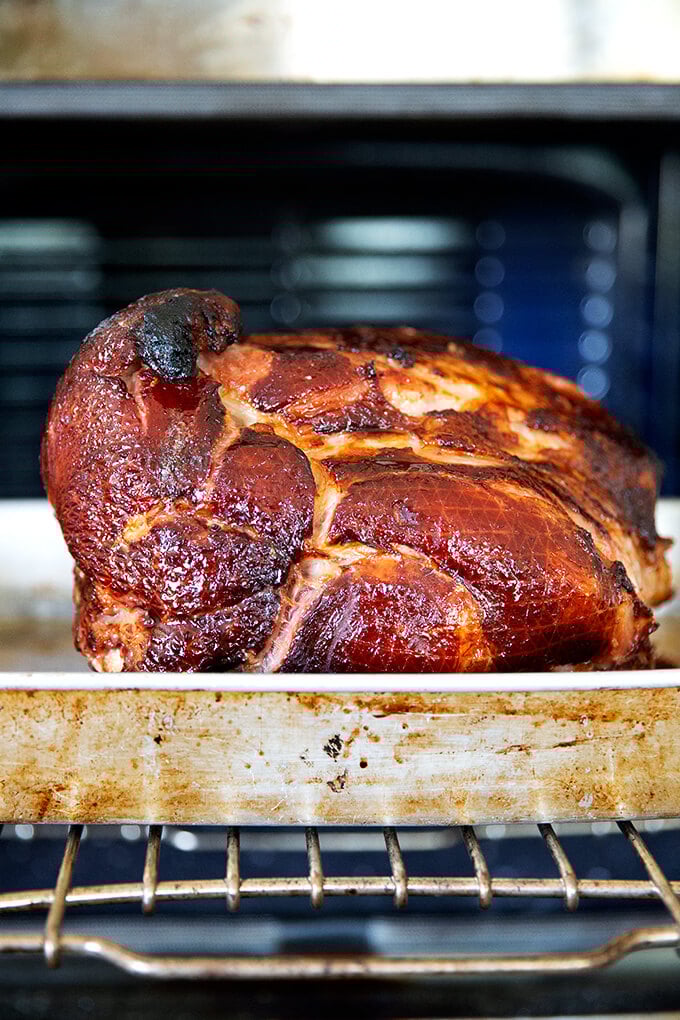
Easy Baked Ham: Achieve Juicy, Tender & Glazed Perfection Without Scoring
Imagine a perfectly baked ham gracing your holiday table or weekend spread: glistening with a rich, caramelized glaze, exceptionally juicy, and so tender it practically melts in your mouth. Now imagine achieving all of this without the fuss of elaborate scoring patterns or painstakingly studding it with cloves. Sound too good to be true? Not with our revolutionary approach to a simple baked ham with brown sugar glaze.
For years, tradition dictated that scoring the ham and embedding it with cloves was essential for flavor and moisture. However, culinary wisdom, and even insights from expert ham producers, reveals a much simpler truth. The secret to an irresistibly juicy and tender ham lies not in intricate knife work, but in a smart cooking method that prioritizes moisture and lets the ham's inherent quality shine. This article will guide you through a foolproof process, ensuring your ham is the star of any meal, impressing guests with its succulent texture and a dazzling, sticky-sweet brown sugar glaze.
The Foundation of Flavor: Choosing Your Ham Wisely
Before you even think about glazes or cooking temperatures, understand this fundamental truth: the quality of your ham is paramount. As culinary experts often note, "If you buy a good one, you’ll bake a good one. If you buy a bad one, you won’t." No amount of fancy technique or delicious glaze can truly salvage a subpar ham. You're not marinating or brining a raw piece of meat; you're simply reheating a cured product, so its initial flavor and texture are key.
Most hams available at supermarkets are fully cooked and ready to eat, only requiring reheating. When selecting your ham, consider these types:
- Bone-In vs. Boneless: Bone-in hams often offer superior flavor and moisture due to the bone's presence during cooking. They also yield a richer stock for future soups. Boneless hams are undeniably easier to carve, making them a practical choice for large gatherings.
- Whole vs. Half Ham: Your guest count will dictate this. A whole ham (typically 10-14 pounds) is ideal for larger parties, while a half ham (5-7 pounds) is perfect for smaller family meals or when you desire fewer leftovers.
- Spiral-Cut vs. Traditional: Spiral-cut hams are pre-sliced, offering incredible convenience for serving. However, their exposed surfaces can be prone to drying out if not cooked carefully. A traditional, unsliced ham allows you more control over moisture retention.
Seek out reputable brands or local butchers known for their quality cured meats. Just like the premium hams from sources like Dakin Farm mentioned in our reference, a well-cured ham needs minimal intervention to be spectacular. A high-quality ham provides the inherent flavor that forms the core of your dish. For more insights on this crucial step, don't miss our article on the Secret to Juicy Baked Ham: Quality Ham & Sticky Brown Sugar Glaze.
The Foolproof Method for Juicy, Tender Ham
Forget the notion that scoring or studding with cloves is essential for a moist ham. While cloves can add aromatic notes to the glaze, they don't impact the ham's internal moisture. The real secret to preventing a dry, tough ham lies in a simple yet effective cooking method that leverages moist heat. Here’s how to achieve that perfectly tender, juicy result:
Initial Moist-Heat Cooking: The Steam Bath Technique
The first stage of baking focuses on retaining and adding moisture. This method is incredibly forgiving and ensures an internal juiciness that will surprise you.
- Preheat & Prepare: Preheat your oven to 325°F (160°C). Place your ham cut-side down (if it's a half ham) on a rack in a sturdy roasting pan.
- Add Hydration: Pour about 1/2 to 1 cup of water, apple juice, or even ginger ale into the bottom of the roasting pan. This liquid will create a steamy environment, preventing the ham from drying out.
- Cover Tightly: Cover the entire roasting pan tightly with heavy-duty aluminum foil. Ensure there are no gaps for steam to escape. This creates a mini-oven effect, steaming the ham gently.
- Slow Bake: Bake for approximately 15-20 minutes per pound for a whole ham, or 10-15 minutes per pound for a spiral-cut ham, until the internal temperature reaches about 135-140°F (57-60°C). For a 13-pound whole ham, this might be around 1 hour 45 minutes, as suggested by our source. Always use a reliable meat thermometer inserted into the thickest part of the ham, avoiding the bone, to monitor doneness.
The Grand Finish: High Heat and Caramelization
Once your ham is moist and nearly heated through, it's time for the dramatic finish – creating that coveted burnished, caramelized crust.
- Uncover & Increase Heat: Carefully remove the foil from the roasting pan. Increase your oven temperature to a higher heat, around 400-425°F (200-220°C).
- First Glaze Application: Generously brush your prepared brown sugar glaze over the entire surface of the ham. Don't be shy!
- Caramelize: Return the uncovered ham to the hot oven for 15-20 minutes, allowing the first layer of glaze to bubble and begin to caramelize.
- Second Glaze (and Third!): Remove the ham from the oven and apply another generous layer of glaze. Repeat this step every 15 minutes or so, for a total of two to three glaze applications, until the ham is beautifully burnished, sticky, and deeply golden brown. The goal is a rich, lacquered appearance.
The Essential Resting Period
Once your ham is beautifully glazed and reaches an internal temperature of 140-145°F (60-63°C) (remember, it's already cooked, you're just heating it through and glazing), remove it from the oven. Tent it loosely with foil and let it rest for at least 15-20 minutes before carving. This crucial step allows the juices to redistribute throughout the meat, ensuring every slice is as moist and tender as possible.
Crafting the Irresistible Brown Sugar Glaze
While the internal juiciness comes from the cooking method, the glorious outer layer of your simple baked ham with brown sugar glaze is thanks to a well-crafted glaze. This sweet and savory crust adds depth, visual appeal, and that truly soul-satisfying flavor that makes a holiday ham so special.
The beauty of a brown sugar glaze is its versatility. While brown sugar is the star, other ingredients can elevate it to new heights:
- Brown Sugar: Light or dark, provides that deep, molasses-like sweetness.
- Acidity: A splash of orange juice, pineapple juice, apple cider vinegar, or even a dollop of Dijon mustard can cut through the sweetness and add brightness. The reference notes how "citrus and honey bring brightness," and mustard sauce was "outrageously delicious."
- Sweetness Boost: Honey or maple syrup can deepen the sweetness and add complex notes.
- Spice: A pinch of ground cinnamon, nutmeg, allspice, or even a tiny dash of cayenne pepper can add warmth and intrigue.
- Optional Liquors: A splash of bourbon or rum can add sophisticated depth to your glaze.
A basic, yet incredibly effective, brown sugar glaze often includes a mix of brown sugar, pineapple juice or orange juice, a touch of Dijon mustard, and a dash of cinnamon or cloves (ground, for the glaze itself). Simmer these ingredients gently in a saucepan until thickened slightly, then apply generously. This sticky-sweet, golden crust that clings to every slice is simply irresistible. For a more detailed exploration of creating the perfect coating, check out our guide on Foolproof Brown Sugar Glazed Ham: Sweet, Savory & Holiday Ready.
Beyond the Oven: Carving, Serving, and Savoring
Once your beautifully burnished ham has rested, it's time for the grand finale: carving and serving. If you chose a boneless ham, carving is straightforward. For a bone-in ham, carefully slice down around the bone and then cut across the grain into desired thickness. Aim for even slices that showcase the juicy interior and glistening glaze.
A perfectly baked ham is the centerpiece of any meal, pairing beautifully with classic sides like creamy mashed potatoes, roasted asparagus, glazed carrots, or a fresh green salad. And don't forget the incredible versatility of leftovers! Ham sandwiches, hearty split pea or ham and bean soup, flavorful ham hash, or cheesy omelets are just a few ways to extend the joy of your simple baked ham with brown sugar glaze.
Embrace the simplicity of this method for your next holiday gathering or Sunday dinner. By focusing on a quality ham and a smart, moisture-retaining cooking technique, you'll achieve a ham that is truly juicy, wonderfully tender, and crowned with a glorious, caramelized brown sugar glaze – all without any unnecessary fuss.
